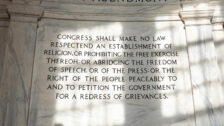
A government may have an environmental, statutory, tort or political obligation to provide safe drinking water without the Constitution itself creating a private right to it.… Continue Reading
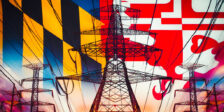
Maryland’s effort to police “greenwashing” marketing claims in the electricity sector just hit a major constitutional roadblock. In a decision last month, the U.S. Court of Appeals for the Fourth Circuit ordered a preliminary injunction against a 2024 Maryland law’s core speech restriction on describing renewable electricity, and sent the remainder of the case back … Continue Reading
The Supreme Court of Maryland ruled last week, “[t]he question presented in this case is whether Maryland local governments may bring state common law tort claims against 26 multinational oil and gas companies to recover damages caused by global greenhouse gas emissions. We hold that they may not.” The Court went on to say, “.. … Continue Reading
On February 6, 2026, the Federal Judicial Center, the research and education arm of the federal judiciary, omitted (i.e., withdrew) a chapter from the newest edition of its reference manual on scientific evidence that addressed climate change. . The manual is a guide to help judges make unbiased determinations about scientific testimony, but in this … Continue Reading
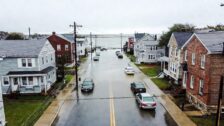
When we talk about “sea level rise,” most people immediately think of melting polar ice and warming oceans. But along much of the United States’ Atlantic coast, especially in and around the Chesapeake Bay, that narrative only tells part of the story. Emerging science shows that land subsidence, the sinking or lowering of the land … Continue Reading
As an environmental attorney who spends much of my time advising business owners, I have learned an immutable truth: markets work best when the rules are clear, fair, and grounded in reality. Environmental policy is no exception. Contrary to the prevailing narrative in popular media, the global business community has not uniformly shifted away from … Continue Reading
As 2025 draws to a close, environmental law once again proved to be less about ideology and more about adaptation. The environmental issues that resonated most this year, from political, cultural to economic, reflected in our Top 10 most read blog posts, were those that sat squarely at the intersection of regulation, innovation, and market … Continue Reading
On October 16, the Federal Deposit Insurance Corporation, the Federal Reserve Board, and the Office of the Comptroller of the Currency jointly “.. announced the withdrawal of their interagency Principles for Climate-Related Financial Risk Management for Large Financial Institutions.” This is a positive and, frankly, refreshing development, a rare instance of government appropriately narrowing its … Continue Reading
There is no factual dispute that Maryland consumes about 40% more electricity than it generates. That shortfall is not shrinking; it is growing, and the cost of that power keeps rising. We have previously written that Maryland Needs to Produce More Electricity. That imperative is even more urgent as demand spikes from artificial intelligence, electric … Continue Reading
Last Monday, the U.S. Department of Energy issued a sweeping emergency order under the Federal Power Act, allowing the Wagner Generating Station in Anne Arundel County, Maryland, to continue producing electricity, despite having nearly exhausted its annual limit on fuel oil usage under state environmental law. This order, requested by PJM Interconnection, one of the … Continue Reading
The U.S. Environmental Protection Agency is preparing to reverse its 2009 “Endangerment Finding,” a regulatory determination that greenhouse gas emissions from motor vehicles, buildings, power plants, and other sources “endanger public health and welfare.” That endangerment pronouncement, made under Section 202(a) of the Clean Air Act, created the legal justification for many of the sweeping … Continue Reading
In a pivotal environmental case with wide reaching implications, the U.S. Supreme Court ruled last Friday that a group of fuel producers have Article III standing to challenge the EPA’s approval of a waiver under the Clean Air Act permitting California regulations (.. adopted in 17 states) requiring automakers to manufacture more electric vehicles and … Continue Reading
The Senate has approved three Congressional Review Act resolutions initiated in the House of Representatives that overturn Environmental Protection Agency waivers, which had effectively imposed a de facto ban on the future sale of gasoline powered cars in California and 17 states, as well as Washington, DC. Congressional disapproval of California’s electric vehicle mandates is … Continue Reading
In a striking development with far reaching implications, the U.S. Court of Appeals for the Eighth Circuit has granted the Motion to Hold Case in Abeyance in the consolidated litigation Iowa v. U.S. Securities and Exchange Commission, the lead challenge to the SEC’s 2024 climate disclosure rules. The court’s April 24, 2025, order halts further … Continue Reading
On April 8, 2025, President Donald J. Trump issued a powerful and consequential Executive Order with the innocuous sounding title, “Protecting American Energy from State Overreach.” The impact of that Executive Order will be far broader than the title belies when it targets “burdensome and ideologically motivated ‘climate change’ or energy policies” .. of several … Continue Reading
The recent enactment of the Climate Change Superfund Act in New York has set the stage for a significant legal battle over the scope of state authority to impose financial responsibility for purported climate related damages. The outcome of this litigation could have far reaching effects, influencing not only New York but the entire energy … Continue Reading
In this instance, the federal government was not coming for your gas stove, but it certainly was coming for your non-condensing natural gas powered hot water heater.… Continue Reading
When Congress overturns these vehicle emission waivers the impact will be far greater than only motor vehicles sold in the future in California and even in the 11 other states that have coopted these regulations.… Continue Reading
Candidate Trump said at a rally in New Jersey last May that he intended to sign an Executive Order on day one that would halt “horrible” offshore windmill projects. … Continue Reading