For many waterfront property owners along the Chesapeake Bay, spring brings a familiar nuisance: aerial spraying by helicopters flying as low as 50 feet above the water, applying a naturally occurring soil bacterium as a biological ‘cosmetic’ pesticide to control midge flies.
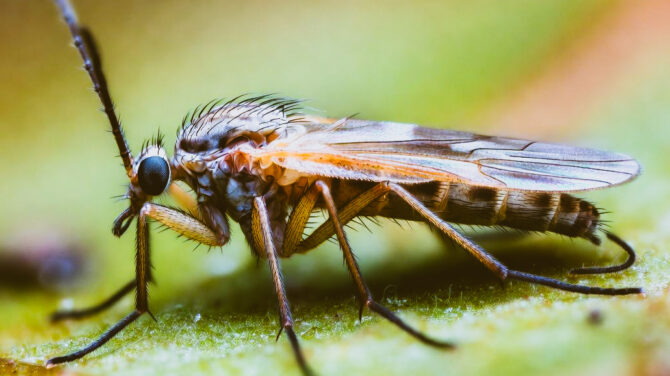
Swarms of the non biting midges (Chironomidae) rise from Maryland’s Back River, Middle River, Bird River, and the tidal Gunpowder. Unlike mosquitoes, midges do not bite, and they do not transmit disease, but they do clog outdoor lights, frustrate residents, and create real operational headaches for outdoor restaurants.
So, it is not a surprise that Baltimore County government, for at least the fourth year, has turned to Bacillus thuringiensis israelensis (Bti), a biological larvicide widely used for mosquito control, as a non essential, but aesthetic solution to midges. Bti is commonly sold under the trade names Vectbac, Teknar, Aquabac, and Bactimos and is often marketed as “natural,” “safe,” and “highly targeted.”
But when it comes to midge suppression in the water along the Chesapeake Bay shoreline, the science tells a very different story. And for property owners along this heavily regulated estuary, the ecological risks are not abstract; there is no debate that this is reputational, but the bigger issue is over a lifetime how those exposures affect human biology and health.
1. Midges Are a Nuisance – But a Keystone Food Source in the Bay
Yes, midges are annoying. But while mosquitoes can be a public health concern, midges in the Bay are at worst a nuisance for a few weeks a year, not a disease vector. However, they do serve as:
- A primary food source for juvenile striped bass, perch, menhaden, and sunfish
- Essential forage for swallows, martins, and bats
- A major energy link between the Chesapeake Bay’s sediments and its fishery food web
Suppressing midges is not like suppressing mosquitoes. In the Chesapeake Bay, midges are part of the foundation of the aquatic food chain. For residents and businesses that depend on healthy fisheries, tourism, or water quality, this matters, as it does for those who dine on blue crabs or Rockfish.
2. What the science says about Bti and non target midges
- First isolated in 1976 in the Negev Desert in Israel this misapplication on water for other than mosquito disease control carries with it risk pathways.
- Banned use: Local governments (e.g., Quebec, Canada) have banned the use of Bti, not only for midges, but even for disease carrying mosquitoes, after a systematic review and meta analysis found significant, consistent negative effects of Bti on bird populations.
- Exposomics: The public, not just suburban MAHA moms, are concerned about the exposome, the totality of environmental exposures an individual experiences over a lifetime and how those exposures affect biology and health.
- Cross boundary impacts: Studies in river valleys show that Bti driven reductions in aquatic midges measurably change the diet and condition of riparian predators (e.g., spiders, birds, and bats) that rely on emerging insects.
For the Chesapeake Bay, tributary creeks and marsh fringes function similarly to the European river floodplains, where these effects were documented high reliance on chironomid emergence to subsidize terrestrial and riparian food webs.
3. Key Chesapeake Bay specific risk pathways
- Food web disruption for juvenile fish:
- Juvenile stages of many Bay species feed heavily on chironomid larvae and pupae in low salinity and tidal fresh habitats.
- Bti induced reductions in midge abundance and emergence can reduce growth and survival in early life stages, with knock on effects on recruitment.
- Reduced benthic processing and water quality resilience:
- Chironomids bioturbate sediments and accelerate organic matter breakdown.
- Their loss can increase sediment oxygen demand and anoxia, undermining nutrient reduction gains in shallow coves and embayments.
- Impacts on insectivorous birds and bats:
- Swallows, martins, and bats foraging along shorelines depend on midge swarms, especially in spring and early summer.
- Long term Bti use in other regions has been associated with declines in aerial insectivores; the Bay already sees stressors on these guilds.
- Spatial spread and cumulative effects:
- In tidal creeks and marsh ditches, Bti can be transported downstream and into adjacent wetlands, extending impacts beyond the treatment footprint.
- Repeated seasonal applications for “nuisance midge” control create chronic suppression, not a one off perturbation.
4. Risk benefit balance in the Chesapeake Bay
- Public health vs. nuisance:
- Mosquitoes kill more humans than any other animal (.. think Malaria); but there is no moral equivalence for Bti spraying midges in the Bay that are only a nuisance, not a disease vector.
- Using Bti at scales sufficient to suppress midges trades a non health nuisance for real ecological risk in a priority restoration estuary.
- Regulatory and policy alignment:
- Bay restoration frameworks emphasize benthic habitat, forage base, and nutrient cycling as critical endpoints.
- Bti use for midge suppression cuts directly against these goals by targeting a keystone detritivore and prey group.
- Alternatives to this spraying:
- Other jurisdictions urge eliminating standing water in downspouts and containers, using yellow or “bug” lightbulbs, etc.
Bottom line for Chesapeake Bay
For mosquito borne diseases, carefully targeted Bti can be defensible. For midges, that are merely annoying, liquid aerial spraying under the Maryland executive order authorized Midge Suppression Pilot, not so much.
While this has not yet been a subject in the 2026 Baltimore County local election (.. really?), state senators and delegates have discussed introducing a cosmetic pesticide ban in the Maryland legislature next year to prohibit the government use of pesticides for non essential aesthetic purposes, thus protecting human health and the environment from unnecessary chemical exposure.
For midge control along the Bay shorelines and tributaries, the disruption of the food chain, impact on biodiversity, and non target species effects (e.g., on bees, birds, bats and more) are not well studied and high and poorly aligned with the survivability of the Chesapeake Bay, not to mention the children who play in school yards, playgrounds, and residential lawns.
_____________
Note, the content above has been generated by an artificial intelligence language model transcribing and combining into outline format my comments as a guest on a podcast last week. My words may not be entirely error free, and should you have questions, please reach out to me or seek advice from an appropriate professional.