After this was posted, on June 16, 2026, the U.S. Department of Justice filed a motion to intervene, requesting a dismissal of the case, arguing the turbines are essential for AI innovation, supporting U.S. military operations. The outcome could shape how environmental law and national security intersect in the AI era.
For regular readers, after a brief hiatus, I am back from an adventure on Annapurna in Nepal (.. yes, the tenth tallest mountain in the world) and feeling fully alive. Weekly posts will resume.
The lawsuit filed last week against xAI over temporary power generation at its Mississippi data center is being framed as a novel environmental justice action. In reality, it is more likely to become a case study in how rapidly evolving infrastructure collides with legacy regulatory frameworks, particularly under the Clean Air Act.
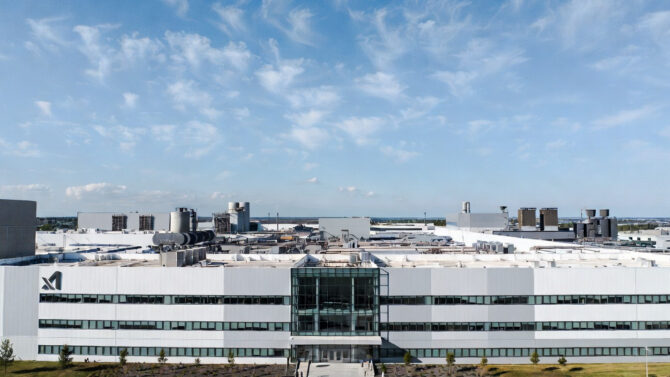
At issue is a complaint filed by the NAACP and its Mississippi state conference in the U.S. District Court for the Northern District of Mississippi. The plaintiffs allege that Elon Musk’s artificial intelligence company xAI and its affiliate, MZX Tech LLC, installed and operate 27 natural gas-fired turbines at the “Colossus Gas Plant” in Southaven without obtaining an air permit, in violation of federal law. The turbines supply electricity to a nearby data center supporting the “Grok” chatbot.
That framing, however, omits critical factual and regulatory context.
Temporary Sources and the Permitting Gap
The turbines at issue are not conventional stationary power sources. They are mobile, modular units intended for short term deployment, essentially bridging infrastructure until grid interconnection is completed. This distinction is not trivial. Under longstanding EPA guidance and state-level implementation practices, temporary sources, particularly those operating for less than a year, often fall outside traditional preconstruction permitting regimes.
Of import, U.S. EPA has delegated authority to the Mississippi Department of Environmental Quality for implementation and enforcement of major components of the Clean Air Act, including the herein complained of New Source Performance Standards.
Indeed, neither Mississippi state regulators nor DeSoto County required permits for these units. That fact alone significantly complicates, if not ends, any claim of a statutory violation. The Clean Air Act’s citizen suit provision applies to violations of an “emission standard or limitation,” not to perceived gaps in regulatory coverage.
In other words, if no applicable permitting requirement attaches to a temporary source under current law, there may be nothing to enforce.
Regulatory Ambiguity Favors the Defendant
Compounding this issue is the EPA’s ongoing rulemaking for combustion turbines. On January 9, 2026, the agency announced amendments to the New Source Performance Standards for stationary combustion turbines, rules that could, in the future, clarify treatment of facilities like this. But those amendments are not yet effective and are almost certain to face judicial challenges.
This places the xAI deployment squarely in, at worst, a regulatory gray zone or, at best, having a ‘get out of jail free’ card. Courts are typically reluctant to impose liability where the governing rules are unsettled or evolving, particularly in highly technical areas involving emissions classifications and source definitions.
From a litigation standpoint, that uncertainty cuts strongly in favor of the defense.
Inconsistent Enforcement Narrative
The complaint also struggles with consistency. xAI previously deployed similar temporary turbines, reportedly up to 35 units, at its earlier “Colossus 1” data center in the same region beginning in 2024. That project proceeded without a comparable legal challenge.
Selective enforcement narratives tend to weaken claims of systemic statutory violations. If the same technology and operational model were accepted, implicitly or explicitly, by regulators and the community in the recent past, a court may question why identical conduct now constitutes an actionable offense. Among other relief requested by the NAACP is to “assess a civil penalty against Defendants of up to $124,426 per day per violation.”
A spokesperson for xAI told media sources, “The temporary power generation units are operating in compliance with all applicable laws.”
Environmental Justice Claims Require More Than Demographics
The plaintiffs emphasize that Southaven and nearby Horn Lake have significant Black populations, invoking environmental justice concerns. Those concerns are important and, in appropriate cases, legally salient.
But demographic statistics alone do not establish a violation under the Clean Air Act. A successful citizen suit must still identify a breached emission standard, a failure to obtain a required permit, or another concrete statutory infraction. Absent that, the claim risks being perceived as policy advocacy rather than enforceable law.
Economic Reality of AI Infrastructure
The broader context matters. AI data center development is capital-intensive and time-sensitive. Grid interconnection delays, often measured in years, create a practical necessity for interim power solutions. Temporary gas turbines, while not ideal from a long-term decarbonization perspective, are currently among the few scalable options available.
This is not unique to xAI. Across the United States, developers are deploying similar stopgap measures to avoid stranding billions in investment while awaiting utility upgrades.
To penalize one operator for adopting a widely used, regulator-tolerated practice would introduce significant uncertainty into infrastructure markets already grappling with supply chain, permitting, and interconnection bottlenecks.
Likely Outcome and Broader Implications
Given the absence of a clearly articulable permitting requirement, the temporary nature of the turbines, and the unsettled regulatory landscape, the legal merits appear to favor xAI. Courts interpreting the Clean Air Act have consistently required plaintiffs to tether claims to specific, enforceable standards, not generalized allegations of environmental harm.
That does not mean the underlying policy questions lack merit. On the contrary, this case highlights a growing mismatch between the speed of AI infrastructure deployment and the pace of environmental regulation. If temporary power generation for data centers presents unacceptable risks, the appropriate remedy is prospective rulemaking, not retroactive litigation.
The stakes extend well beyond Mississippi. States are already differentiating themselves as either facilitators or obstacles to AI investment. Jurisdictions that impose unpredictable or novel liabilities on interim infrastructure risk deterring development altogether.
For now, this lawsuit appears less likely to halt xAI’s operations than to underscore the need for clearer, technology neutral regulatory frameworks. In that sense, including being “saved” by the January 9, 2026, released amendments to the New Service Performance Standards, as well as lobbying the content of those pending Standards to support data center growth, the case may ultimately serve the industry, not by establishing liability, but by prompting the legal clarity required to sustain responsible growth.